Yohimbe: The One Ingredient That Changes How You Read a Label
Quick Answer: Is Yohimbe Safe to Take?
It depends entirely on the dose and on you — which is the problem, because most products do not tell you the dose. Yohimbe bark contains yohimbine, an alpha-2 adrenergic antagonist with documented effects on blood pressure, heart rate and anxiety. It is not comparable to a gentle adaptogenic root. For a healthy adult a small amount is usually uneventful; for someone with hypertension, an arrhythmia, an anxiety disorder or on an MAOI it is genuinely risky, and several countries restrict it for exactly that reason.
- What it is: an alpha-2 adrenergic antagonist, historically a prescription drug in some countries.
- Reported effects: raised blood pressure, tachycardia, anxiety, headache, GI upset; worse at higher intakes.
- The specific problem: published analyses repeatedly find label content and actual content diverging.
Why yohimbe is in a different category from the rest of the shelf
Most botanicals in a men's vitality blend act — where they act at all — slowly and indirectly: an adaptogen nudging cortisol, a polyphenol acting as an antioxidant. Yohimbine does something else. It blocks alpha-2 adrenergic receptors, which removes a brake on noradrenaline release. The result is a systemic increase in sympathetic tone: higher blood pressure, faster heart rate, heightened arousal and, in a fair number of people, anxiety.
That is a drug-like action, and purified yohimbine has been regulated as a prescription medicine in various jurisdictions. Yohimbe bark extract sold as a supplement is the same alkaloid arriving through a much less controlled route.
The adverse effects that are actually documented
US national health information sources list, for yohimbe and yohimbine: increased blood pressure, rapid or irregular heartbeat, headache, anxiety and agitation, sweating, nausea and other gastrointestinal upset. At higher intakes the reported picture escalates to severe hypertension, cardiac arrhythmia, seizures and, in rare case reports, death — generally involving concentrated products or large amounts. Poison-centre and case-report literature on yohimbine-containing supplements is one of the more substantial bodies of adverse-event data for any botanical sold in this category.
The interaction list worth memorising
| Combine with | Why it matters |
|---|---|
| MAO inhibitors | Both raise noradrenergic activity; the combination is the classic hypertensive-crisis pairing |
| Tricyclic antidepressants | Additive cardiovascular and blood-pressure effects |
| Stimulants, including high-dose caffeine | Additive on heart rate, blood pressure and anxiety |
| Blood-pressure medication | Yohimbine works against it |
| Any drug for an arrhythmia | Increased sympathetic tone is the opposite of the goal |
The label-accuracy problem, which is specific to this ingredient
Independent analyses of yohimbe supplements sold in the United States have repeatedly found that the yohimbine content bears little consistent relationship to what the label states. Some products tested contained a small fraction of the labelled amount; others contained substantially more. A minority of products stated a yohimbine quantity at all.
Put that together with the proprietary blend convention — where an ingredient is named but no amount is given — and you get the worst case: a pharmacologically active alkaloid whose dose is unknown to the buyer and possibly variable between batches. That is not a reason to assume the worst about any particular product. It is a reason not to guess.
Reading the descending-order rule in your favour
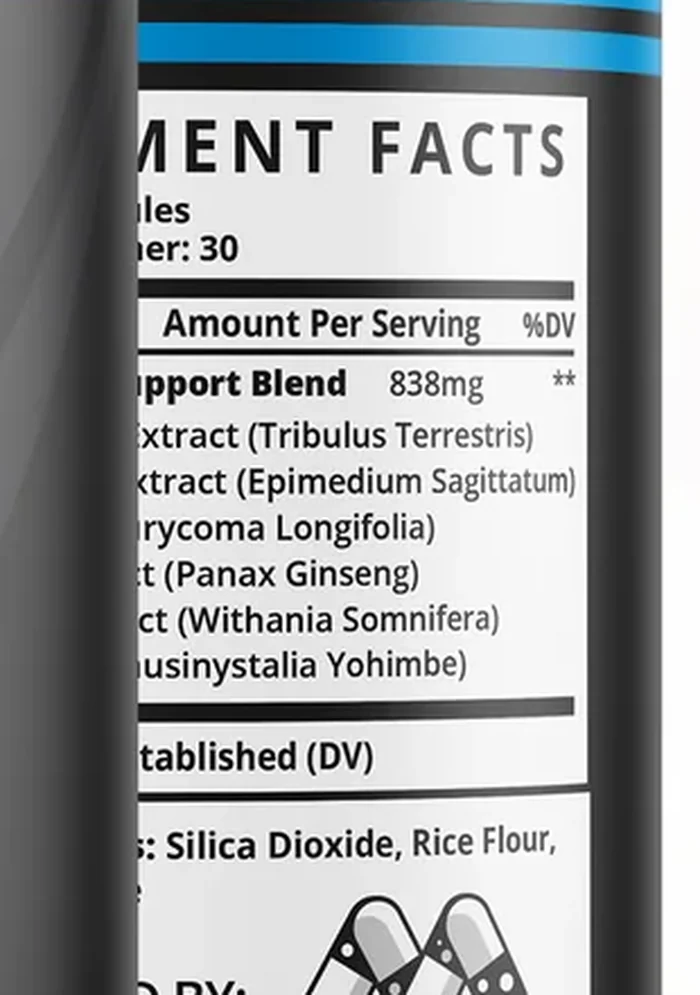
There is one genuinely useful signal. Blend components must be listed in descending order of predominance by weight. If yohimbe appears last in a six-ingredient blend, it is the smallest share of the total — meaningfully reassuring, if not conclusive. If it appears first or second, or if the product is a yohimbe-forward "fat burner", the calculation is different and the caution should scale accordingly.
A practical checklist
- Find yohimbe in the ingredient list. If it is there, stop and read the rest of this list.
- Check your own risk factors: blood pressure, heart rhythm, anxiety, kidney and liver function, and every medicine you take.
- Look for a stated yohimbine amount. If there is none, treat the product as unquantified rather than as low-dose.
- Note where it sits in the blend order.
- Ask a pharmacist. This is the single highest-value two minutes available to you, and it is free.
- If you take it, never exceed the label dose and never stack it with another stimulant.
Medical note: this article is general information, not medical advice. Yohimbe is not appropriate for everyone and can be dangerous in combination with certain medicines and conditions. If you experience chest pain, a racing heartbeat, severe headache or extreme anxiety after taking a supplement containing it, seek medical attention.
Scientific references
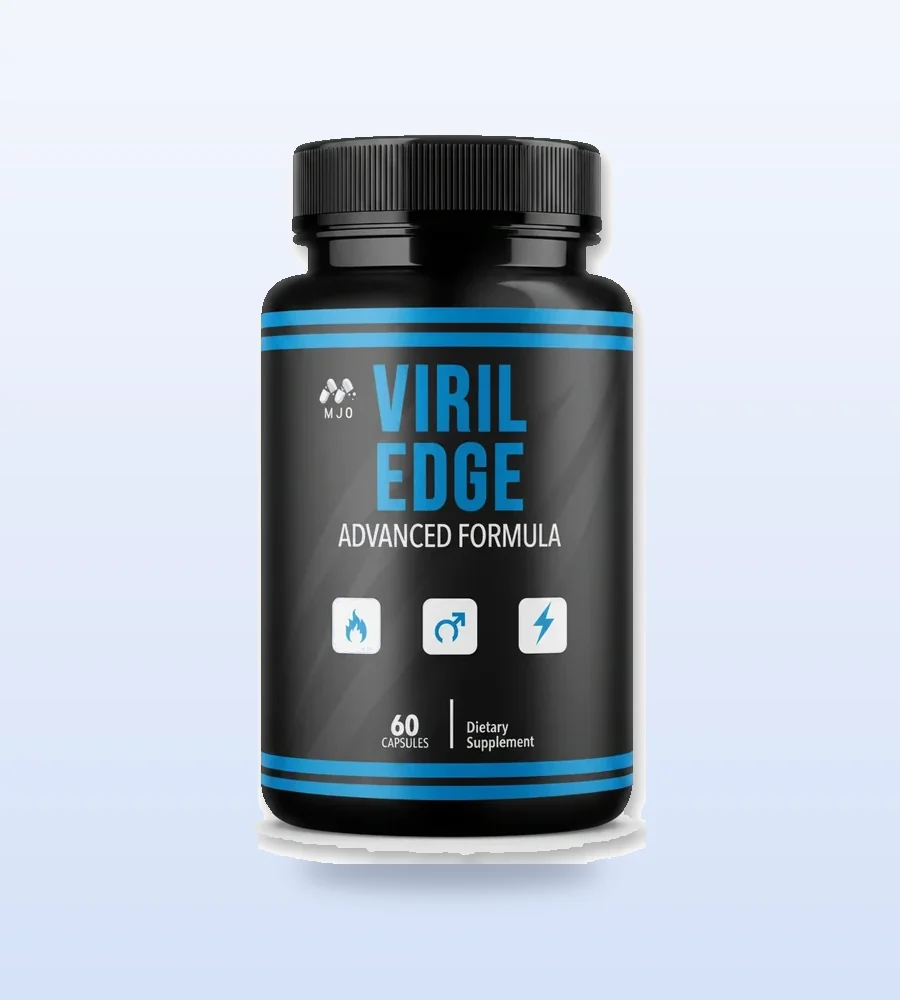
Viril Edge lists yohimbe sixth of six
See the full panel transcription, the blend arithmetic and what the descending-order rule implies about the amount.
Read the Viril Edge Review