Best Male Enhancement Pills in the World? Traditional Male Tonics Across Cultures, Examined
Quick Answer: Are There Best Male Enhancement Pills in the World?
No single country makes a superior pill, and no botanical tradition has produced one that outperforms the rest under testing. The plants that turn up in almost every men's formula sold today come from four regions and a handful of traditions, and among them only Panax ginseng and ashwagandha carry a substantial body of randomised human research, most of it small and short. Everything else on the shelf rests mainly on traditional use, laboratory work or animal studies, which are reasons to be curious rather than reasons to expect a result.
- Best-studied: Panax ginseng (Korea, China) and ashwagandha (India), both tested in placebo-controlled human trials.
- Promising but thin: Eurycoma longifolia (Malaysia) and Epimedium (China), with small or mostly preclinical evidence.
- Weak or drug-like: tribulus has repeatedly underperformed for testosterone; yohimbe (West Africa) is pharmacologically active and needs medical caution.
Why "in the world" is a marketing frame, not a botanical fact
The phrase people search for is understandable. If a plant has been used for a thousand years somewhere, it is tempting to assume that somewhere knows something. But the search for the best male enhancement pills in the world runs into a structural problem immediately: nearly every formula on every continent is built from the same short list of plants, and the differences between products are differences of dose, extract quality and honesty, not of geography.
The six botanicals that dominate this category come from Korea and China, from the Ayurvedic tradition of the Indian subcontinent, from the rainforests of Malaysia and Indonesia, from Bulgaria by way of sports nutrition, and from West Africa. A label printed in the United States and a label printed in Kuala Lumpur usually name most of the same plants. What separates them is what the panel discloses.
So the useful question is not which country makes the best pills. It is which ingredients have been tested in people, at what amounts, and whether the product in front of you contains anything close to those amounts.
Korea and China: Panax ginseng, the most-studied name on the list
Panax ginseng has been used in Korean and Chinese medicine for centuries as a tonic for fatigue and general vitality, and it is by some distance the most researched plant in this category. It has been examined in randomised, placebo-controlled human trials, with the active constituents (ginsenosides) reasonably well characterised and standardised extracts available commercially.
The trials most often cited used roughly 200 to 400 milligrams a day of a standardised extract, typically for eight to twelve weeks. The picture that emerges is modest and mixed: several small studies report improvements in subjective energy and sexual function scores, other studies find little, and published summaries of that literature consistently note small sample sizes, short durations and varying extract specifications. That is a real evidence base, and it is also a cautious one.
The practical implication for a shopper is arithmetic rather than botany. If a blend contains ginseng at well under 200 milligrams, the trials that made ginseng interesting are not the trials that describe what is in the capsule.
India: ashwagandha and the rasayana tradition
Ashwagandha (Withania somnifera) is classified in Ayurveda as a rasayana, a rejuvenating tonic, and modern research has treated it mostly as an adaptogen studied for stress and cortisol rather than as a sexual-performance herb. It has the second-largest human literature in this group, with trials commonly using 300 to 600 milligrams a day of a root extract for eight to twelve weeks.
Several of those trials report reductions in self-reported stress and improvements in sleep quality, and a smaller number have looked at hormonal measures in men with mixed and less consistent findings. The stress angle matters here more than it first appears: chronic stress and poor sleep affect libido and energy through well-understood physiology, so an ingredient that genuinely helps with those is doing something relevant even if it is not doing what the packaging implies.
The caveats are the familiar ones. Trials are small, extract types differ, and long-term safety data is limited. Ashwagandha is also one of the botanicals with reported cases of liver injury in the literature, which is uncommon but documented and worth knowing about.
Six traditions, one panel
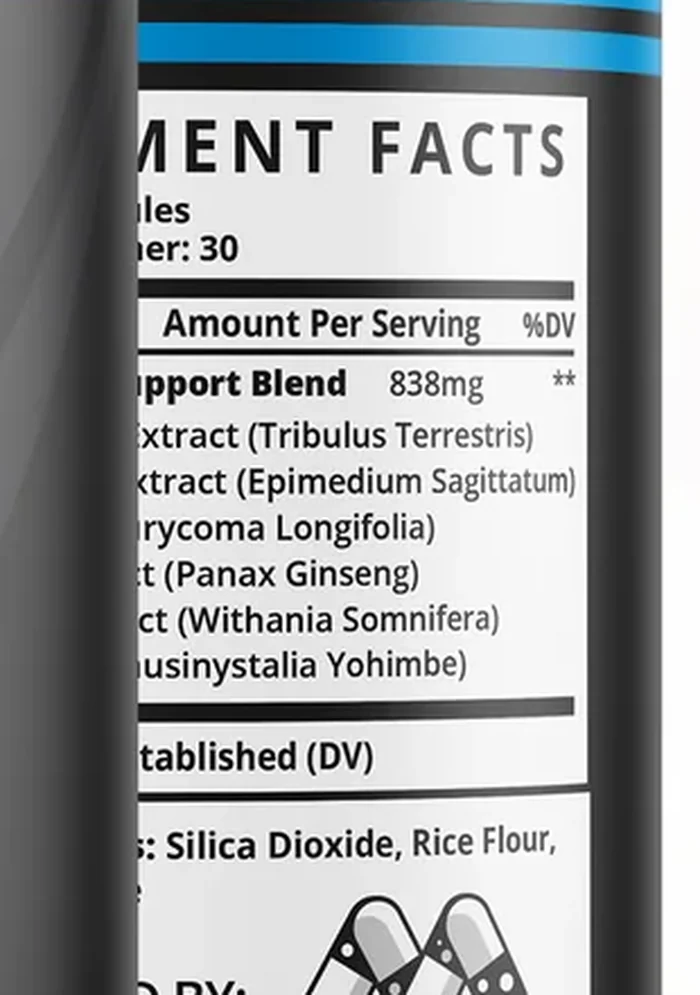
Viril Edge puts all six of these botanicals into a single 838 mg blend taken as two capsules a day. The main page transcribes the panel in full, works through the blend arithmetic, and does not skip the yohimbe question. Current package options are listed at the official store.
Check Current Package OptionsMalaysia and Indonesia: tongkat ali (Eurycoma longifolia)
Known as tongkat ali in Malaysia and pasak bumi in Indonesia, Eurycoma longifolia is the regional equivalent of ginseng in reputation: a root decoction traditionally taken for energy, stamina and male vitality. It has attracted genuine scientific interest, including small human trials using roughly 200 to 400 milligrams a day of a water-soluble extract.
Some of those trials have reported changes in stress markers, subjective wellbeing and hormonal measures. They are, however, few in number, small in size, and frequently conducted with a single proprietary extract, which makes the results hard to generalise to a different extract in a different capsule. Published summaries describe the evidence as preliminary, and that is the fair description.
Eurycoma is also one of the ingredients where sourcing matters. Analyses of products in Southeast Asian markets have found adulteration and heavy-metal contamination in some samples, which is an argument for buying from sellers who publish testing rather than for buying the cheapest listing.
China: horny goat weed (Epimedium)
Epimedium has been used in Chinese medicine for a long time and carries the most memorable common name in the category. Its best-known constituent, icariin, has been studied in the laboratory and shows activity on the same enzyme pathway targeted by a class of prescription medicines, which is the origin of most of the excitement around it.
The gap between that laboratory finding and a capsule is wide. Cell and animal work does not establish that a plant extract taken by mouth reaches a relevant concentration in a person, and the human trial evidence for epimedium in men is sparse. The icariin content of commercial extracts also varies enormously, and it is rarely stated on a label. This is a plausible ingredient with an interesting mechanism and, as things stand, little human data.
Bulgaria, India and the gym: tribulus terrestris
Tribulus terrestris took a different route into this category. It grows across southern Europe and Asia and appears in both Ayurvedic and Chinese traditions, but its modern reputation came from Eastern European sports circles in the 1970s and 1980s and the claim that it raised testosterone.
That claim has been tested more than most, and it has generally not held up. Controlled trials in men, including trained athletes, have repeatedly failed to find meaningful testosterone increases from tribulus supplementation. Some trials have reported effects on self-reported sexual function that may be independent of hormones, but the testosterone story specifically is one of the clearer negative results in supplement research. When a formula leads with tribulus, that is worth knowing.
West Africa: yohimbe, the outlier that behaves like a drug
Yohimbe bark comes from Pausinystalia yohimbe in West and Central Africa, and it does not belong in the same conversation as the others. Its principal alkaloid, yohimbine, is an alpha-2 adrenergic antagonist with documented effects on blood pressure, heart rate and anxiety, and purified yohimbine has been regulated as a prescription medicine in several countries.
That makes yohimbe the one ingredient in this list where the safety discussion outranks the efficacy discussion. Reported adverse effects include raised blood pressure, rapid or irregular heartbeat, headache and anxiety, and the interaction list includes MAO inhibitors, tricyclic antidepressants, stimulants and blood-pressure medication. We have written a separate piece on yohimbe dosing, label accuracy and who should avoid it, because it genuinely needs the space.
Evidence strength, side by side
The table below summarises where each tradition's flagship plant currently stands. "Trial range" refers to daily amounts commonly used in published human studies, not to a recommendation, and evidence strength is our reading of the balance of that literature.
| Botanical | Tradition and region | Trial range in human studies | Evidence strength | Main caution |
|---|---|---|---|---|
| Panax ginseng | Korean and Chinese medicine | About 200–400 mg/day standardised extract | Moderate; several small RCTs | Stimulating for some; interacts with anticoagulants |
| Ashwagandha | Ayurveda, Indian subcontinent | About 300–600 mg/day root extract | Moderate for stress outcomes; weaker for hormones | Rare reports of liver injury; thyroid interaction |
| Eurycoma longifolia | Malaysia and Indonesia | About 200–400 mg/day extract | Preliminary; few small trials | Adulteration and contamination in some markets |
| Epimedium | Chinese medicine | Not well established in humans | Weak; mostly laboratory and animal work | Icariin content rarely disclosed |
| Tribulus terrestris | Ayurveda, Chinese medicine, sports use | Varies widely across trials | Weak for testosterone; repeatedly negative | Marketing claims outrun the data |
| Yohimbe | West and Central Africa | Pharmacological, not nutritional | Drug-like activity; substantial adverse-event literature | Blood pressure, heart rhythm, anxiety, drug interactions |

What tradition cannot tell you
Long use is genuine evidence of something, and it is worth saying what. It tells you a plant was available, tolerable enough to keep using, and valued by people who watched each other take it. That is not nothing. It is also not what a modern buyer needs to know.
Tradition cannot tell you the dose, because traditional preparations were decoctions, wines and whole powdered roots, not standardised extracts concentrated many times over. It cannot tell you about interactions with prescription medicines that did not exist. It cannot separate a real effect from expectation, because there was no placebo arm and no blinding, and effects on libido and energy are exactly the kind that respond strongly to expectation. And it cannot warn you about contamination or adulteration in a modern supply chain.
The blunt version: none of these plants is a treatment for erectile dysfunction, low testosterone or any other diagnosed condition, and nothing sold as a dietary supplement may claim to be. If the problem is persistent, the right move is a clinician, because erectile difficulty is often the first visible sign of a cardiovascular or metabolic issue that deserves attention in its own right. A supplement that delays that conversation has cost you something real.
A thousand years of use tells you a plant was tolerated. A randomised trial tells you whether it worked. Those are different claims, and only one of them belongs on a label.
How to judge a product built on these plants
Once you accept that the plants are largely the same everywhere, choosing between products becomes a documentation exercise. The checks below are the ones that actually separate the best herbal male enhancement pills from the rest, and none of them requires trusting a marketing claim. They matter most to the group these tonics are marketed hardest to, which is why they run alongside the age-specific version in our guide to a testosterone booster for men over 50.
- Per-ingredient amounts. Compare the milligrams on the panel against the trial ranges in the table above. A single blend total means the comparison cannot be made.
- Extract standardisation. "Panax ginseng root extract" standardised to a stated ginsenoside percentage is a different product from unspecified root powder.
- Third-party testing. A named laboratory, a batch number and a date, available on request. Particularly important for imported botanicals.
- Nothing that promises drug-like speed. Products advertised to work within an hour are the ones regulators most often find spiked with undeclared prescription drug ingredients.
- An honest yohimbe disclosure if it is present at all.
- A seller you can trace. The best place to buy male enhancement pills is the manufacturer or an authorised seller, where the batch, the guarantee and the label all belong to the same chain of custody.
Two products can name identical plants and differ completely on all six points. That is why the question of which are the best male enhancement pills that actually work is answered by the panel rather than by the provenance story on the front of the box. The same logic applies across capsules, powders, patches and drink formats, where the format changes the packaging and the dose disclosure changes the product.
Where Viril Edge sits in this picture
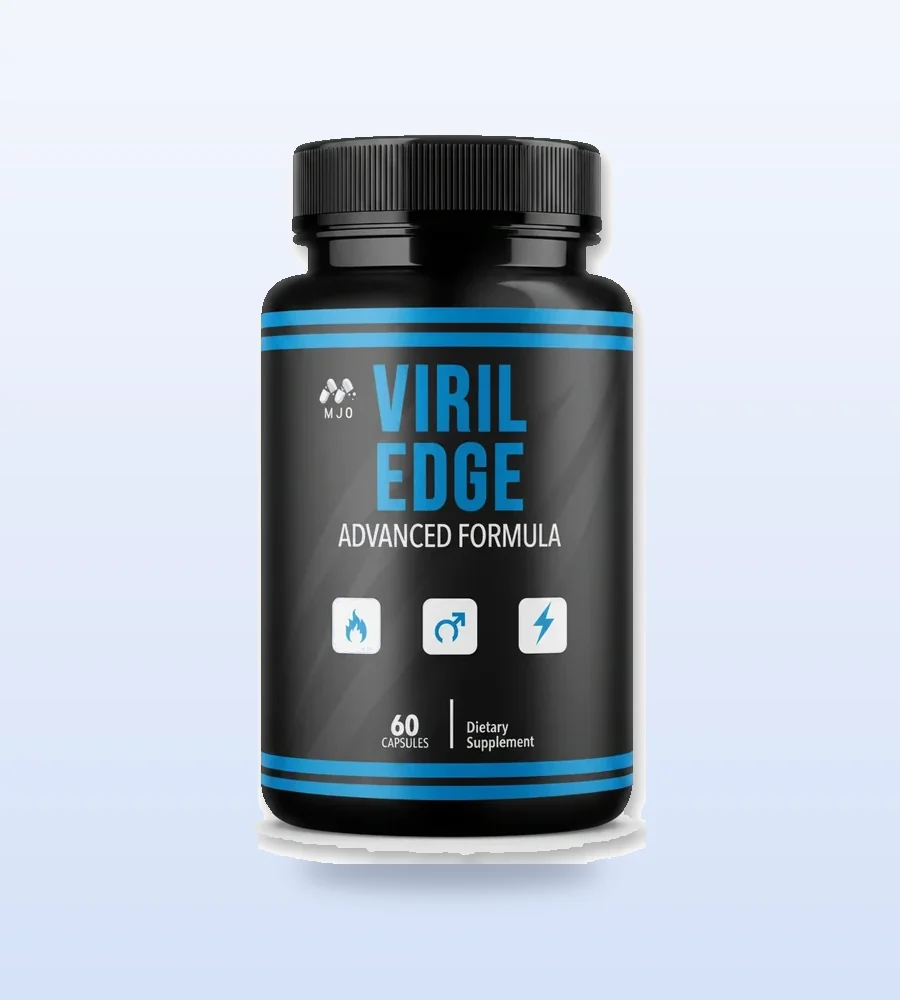
Viril Edge combines all six of these botanicals in a single 838 mg blend, taken as two capsules a day, with yohimbe listed last of the six. It is a fair representative of how this category is built: the traditional names are all present, the ingredient list reads like a tour of four continents, and the per-ingredient amounts are not disclosed because the formula uses a proprietary blend.
Spread across six botanicals, 838 milligrams averages roughly 140 milligrams each, which sits below the ranges used in the ginseng, ashwagandha and Eurycoma trials described above. The descending-order rule tells you the first-listed ingredient takes the largest share and yohimbe the smallest, and that is the extent of what the panel discloses. We would rather set that out plainly than imply a precision the label does not provide.
Medical note: this article is general information about herbal traditions and the research on them, not medical advice. Dietary supplements are not intended to diagnose, treat, cure or prevent any disease. Several plants discussed here interact with prescription medicines. Speak to a qualified healthcare professional before starting any supplement, especially if you take medication or have a heart, liver, thyroid or blood-pressure condition.
Frequently asked questions
Which traditional male tonic has the strongest human evidence?
Panax ginseng and ashwagandha have the largest bodies of human research among the botanicals used in men's formulas, and both have been studied in randomised placebo controlled trials rather than only in traditional texts. Even so, those trials are mostly small and short, the extracts differ between studies, and the findings are best described as supportive rather than settled.
Does centuries of traditional use mean a herb is safe?
No. Traditional use tells you that something was tolerated well enough to keep using, usually as a whole plant preparation at modest amounts. Modern supplements often use concentrated extracts at higher amounts, combine several plants at once, and are taken alongside prescription medicines, and none of those conditions existed in the tradition that gave the plant its reputation.
Do traditional male tonics raise testosterone?
For most of them the honest answer is that the evidence does not support a reliable increase in healthy men. Tribulus terrestris in particular has been tested repeatedly for that effect with generally unimpressive results. Some trials of ashwagandha and Eurycoma longifolia have reported hormonal changes, but the studies are small and the results are not consistent enough to promise an outcome.
Are imported herbal tonics safe to buy from overseas sellers?
They carry extra risk. Regulators have repeatedly found imported products in this category adulterated with undeclared prescription drug ingredients, which do not appear on the label and can interact dangerously with nitrates and blood pressure medicines. Buying from the manufacturer or an authorised seller, and avoiding products that promise drug like speed, removes most of that risk.
Scientific references
See the six botanicals on one panel
Ginseng, ashwagandha, Eurycoma, epimedium, tribulus and yohimbe in a single 838 mg blend, two capsules a day. Check what the official store lists today.
See Package Options